

Nonsurgical Hip Treatments
Hip pain can make walking, exercising, working, and performing everyday activities difficult. Conditions such as hip arthritis, overuse injuries, sports injuries, and other musculoskeletal problems may cause pain, stiffness, reduced range of motion, and difficulty bearing weight. In many cases, treatment can begin with nonsurgical options designed to reduce symptoms, improve function, and help patients remain active.
Michael Van Manen, DO, is a board-certified orthopaedic surgeon serving patients in Colorado Springs, Colorado, with a clinical focus that includes hip and knee conditions, arthritis management, joint replacement, and fracture care. He provides individualized evaluation and treatment recommendations based on the underlying cause of hip pain and each patient's functional needs.
Nonsurgical hip treatment in Colorado Springs may include activity modification, therapeutic exercise and physical therapy, weight management when appropriate, medications, injections, and other conservative approaches. The appropriate combination depends on the diagnosis, severity of symptoms, overall health, and response to previous treatment.
If hip pain is interfering with your daily activities or limiting your mobility, an orthopaedic evaluation can help identify the cause of your symptoms and determine whether nonsurgical treatment may be appropriate.
What are Non-Surgical Hip Treatments?
The hip is a ball-and-socket joint that connects the thigh bone to the pelvic bone. As a major weight-bearing joint with a wide range of motion, the hip is susceptible to various kinds of injuries. Hip problems may arise with overuse, acute trauma, degenerative diseases such as arthritis, and sports injuries. These conditions require appropriate treatment, which may be non-surgical or surgical. The non-operative orthopaedic treatment options are usually the first line of treatment and include non-pharmacological and pharmacological interventions.
What are Non-Pharmacological Interventions?
Non-pharmacological interventions may range from simple lifestyle modification or physical exercises and rehabilitation programs. Some of the non-pharmacological interventions include:
Weight reduction and physical exercise
The lifestyle changes resulting in weight loss in obese individuals and doing appropriate physical exercises plays an important role in the prevention and management of hip conditions. The optimal weight (BMI) should be 18.5 to 25. BMI of 25-29 is considered overweight and BMI over 30 is considered as obese. Exercises are contraindicated in individuals suffering from cardiovascular diseases. Therefore, rigorous exercises are not ideal for all patients and must be individualized for every patient and done under the supervision of a trained professional.
Transcutaneous electrical nerve stimulation
The transcutaneous electrical nerve stimulation (TENS) method involves the use of low-voltage electric impulses to relieve pain. It is believed to provide pain relief by inhibiting the conduction of pain impulses to the receptors in the brain and spinal cord. The patient wears a device and this device generates the impulses that offer pain relief to the patient. The frequency of the impulses, duration of treatment, and location of the electrical electrodes on the body are decided by your physician based on the severity of the condition as well as the response of the patient. Using the device for at least 4 weeks may provide significant pain relief. It should not be used by patients with a pacemaker or cochlear implants, or those suffering from epileptic conditions. It should also not be used during pregnancy.
Thermotherapy
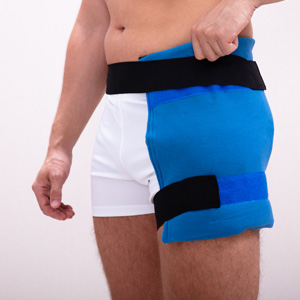
Thermotherapy involves the application of hot or cold packs to the affected area on the hip. Although there is some evidence to support the use of cold therapy in providing symptomatic relief, it is contraindicated in individuals with thermoregulatory impairments. Individuals having peripheral vascular disease, diabetes, cardiovascular disease, and hypertension, or who are pregnant should use it with caution.
Acupuncture
This method involves the insertion of sterile needles into specific acupuncture points or pressure points on the hip. It is believed that insertion of needles at specific points restores the flow of “qi”, a form of energy and thereby relieves the pain. A modification in acupuncture is electro-acupuncture where the needles are stimulated by an electro-stimulator. Acupuncture performed by trained professionals is considered to be safe and offers pain relief. However, it may have certain risks if treated by untrained professionals.
Massage therapy
Massage is one of the oldest methods of treatment and can help to reduce pain through increased circulation of blood and lymph, decreased muscle tension, and therapeutic effects of the touch.
What are Pharmacological interventions?
Pharmacological interventions include management of pain using medicinal preparations such as pain-relieving medications or injections.
Non-steroidal anti-inflammatory drugs
These are known as NSAIDs and are found to be effective in reducing pain and inflammation of the hip. Caution must be taken while using NSAIDs for overdosing as they are known to cause liver toxicity. Patients with liver diseases must take extreme care while using them. They can cause a range of side effects that increase with the concomitant use of diuretics, angiotensin-converting enzyme inhibitors, angiotensin 2 receptor blockers, anticoagulants, or oral corticosteroids.
Steroid injections
These injections of steroids are given directly into the affected hip joint for severe pain when the use of NSAIDs does not bring appropriate relief. Steroids are very strong anti-inflammatory drugs and if used orally cause various side effects on other body systems. Local analgesics that prevent the sensation of pain are sometimes given along with steroids in the same shot to bring relief quickly.
Weak and strong opioids
Opioids are prescribed when the use of analgesic medications or NSAIDs do not offer symptomatic pain relief, if other treatments have intolerable side effects or when surgery is delayed or contraindicated. Though they offer better pain relief than NSAID’s they are known to cause side effects such as dry mouth, nausea, vomiting, dizziness, and constipation. Overdose may lead to respiratory depression. The dose is reduced slowly otherwise it can cause withdrawal effects. Opioids are also known for addiction and should be used short-term as directed.
Disease-modifying anti-rheumatic drugs and biological agents
Disease-modifying anti-rheumatic drugs (DMARDs) aim at halting the progression of the disease and offer symptomatic relief. Biological agents are antibodies against disease-causing agents that are manufactured using genetic engineering technology. These agents are recommended to individuals with severe disease conditions.
Why Choose Dr. Michael Van Manen, DO for Nonsurgical Hip Treatments in Colorado Springs?
Not every hip condition requires surgery. Depending on the diagnosis and severity of symptoms, conservative treatment may help reduce pain, improve mobility, and support a return to daily activities. An individualized evaluation is an important first step in determining which treatment options may be appropriate.
Michael Van Manen, DO is a board-certified orthopaedic surgeon in Colorado Springs whose practice includes hip and knee conditions, arthritis management, general orthopaedics, fracture care, total joint replacement, and revision joint replacement. His broad orthopaedic experience allows him to evaluate hip pain and discuss both nonsurgical and surgical treatment options when appropriate.
Nonsurgical treatment recommendations may involve a combination of activity modification, rehabilitation, medications, injections, and lifestyle changes. The appropriate treatment plan depends on the patient's diagnosis, symptoms, medical history, and treatment goals.
Nonsurgical Hip Treatments FAQs
What are nonsurgical hip treatments?
Nonsurgical hip treatments are conservative approaches used to manage hip pain and improve function without an operation. Depending on the underlying condition, treatment may include physical therapy, therapeutic exercise, activity modification, weight management, medications, injections, and other supportive measures.
What hip conditions can be treated without surgery?
Many hip conditions may initially be managed conservatively, including certain forms of arthritis, overuse injuries, muscle or tendon problems, and some sports-related injuries. Whether nonsurgical treatment is appropriate depends on the specific diagnosis and severity of the condition.
Can physical therapy help with hip pain?
Physical therapy may help improve strength, flexibility, range of motion, balance, and functional movement. A rehabilitation program should be tailored to the patient's diagnosis and physical abilities rather than using the same exercise program for everyone.
Can losing weight help reduce hip pain?
For patients who are overweight, weight management may reduce stress on weight-bearing joints and may help improve mobility and overall health. A physician or qualified healthcare professional can help determine whether weight management should be incorporated into an individual hip treatment plan.
Are medications used to treat hip pain?
Medications may be recommended for certain causes of hip pain. Depending on the diagnosis and a patient's medical history, a physician may consider medications such as anti-inflammatory or pain-relieving drugs. Because medications can have side effects and may interact with other medicines or medical conditions, they should be taken only as directed by a qualified healthcare professional.
Can hip injections provide pain relief?
In selected patients, injections may be used to help manage hip pain. Corticosteroid injections, for example, may provide temporary relief from inflammation and pain for certain conditions. Your physician can determine whether an injection is appropriate based on the cause of your symptoms and your overall health.
What is activity modification for hip pain?
Activity modification involves temporarily changing or limiting activities that aggravate your symptoms while maintaining appropriate movement and conditioning. Your healthcare provider or physical therapist can help identify activities that are appropriate during recovery.
Are heat and cold therapy useful for hip pain?
Heat or cold applications may provide temporary symptomatic relief for some patients. The appropriate option depends on the underlying condition and individual circumstances. Patients with certain medical conditions should consult their healthcare provider before using these therapies.
When should I see an orthopaedic surgeon for hip pain?
Consider an orthopaedic evaluation when hip pain persists, worsens, limits your daily activities, affects your ability to walk or exercise, or does not improve with initial conservative measures. An evaluation can help determine whether your symptoms are caused by arthritis, an injury, or another condition.
Does nonsurgical treatment mean I will never need surgery?
Not necessarily. Some patients achieve satisfactory symptom relief with conservative treatment, while others may eventually require surgery if symptoms persist or the underlying joint damage progresses. Your treatment plan can be adjusted based on your response to conservative care.
How is the cause of hip pain diagnosed?
Diagnosis generally begins with a review of your symptoms and medical history along with a physical examination. Depending on your symptoms, your physician may recommend imaging studies such as X-rays or other diagnostic tests to evaluate the hip joint and surrounding structures.
Schedule a Nonsurgical Hip Treatment Consultation in Colorado Springs
Persistent hip pain can interfere with mobility and quality of life, but surgery is not always the first treatment option. A thorough orthopaedic evaluation can help identify the source of your symptoms and determine whether nonsurgical hip treatment in Colorado Springs may be appropriate.
Michael Van Manen, DO provides comprehensive orthopaedic care for hip and knee conditions, including arthritis management and joint replacement, in Colorado Springs, Colorado. If you are experiencing ongoing hip pain or stiffness, contact Colorado Springs Orthopaedic Group to schedule an evaluation and discuss your treatment options.
Whether your goal is to reduce pain, improve mobility, return to physical activity, or determine whether additional treatment is needed, an individualized orthopaedic assessment can help you take the next step in managing your hip condition.
Schedule an Appointment
Our team is here to answer your questions and help you find the right treatment for your condition.